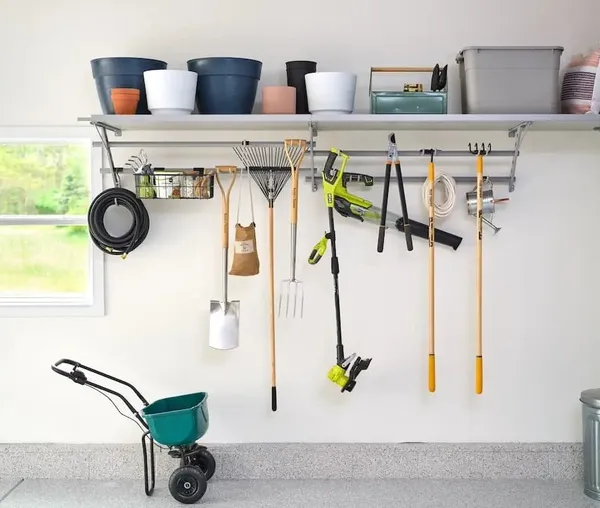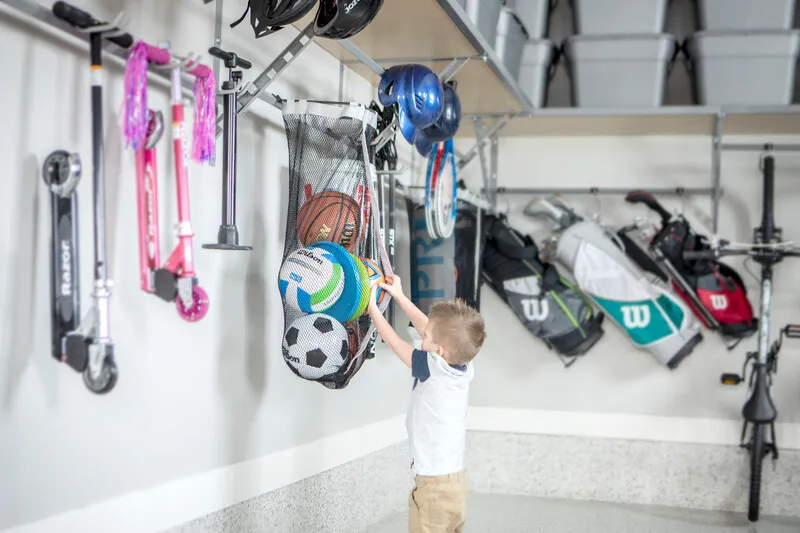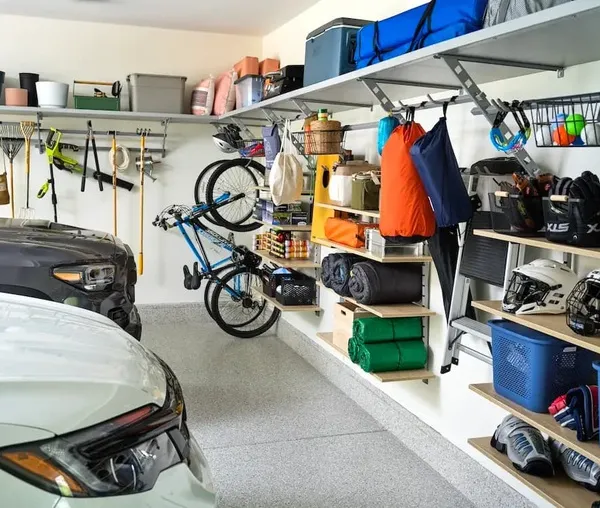



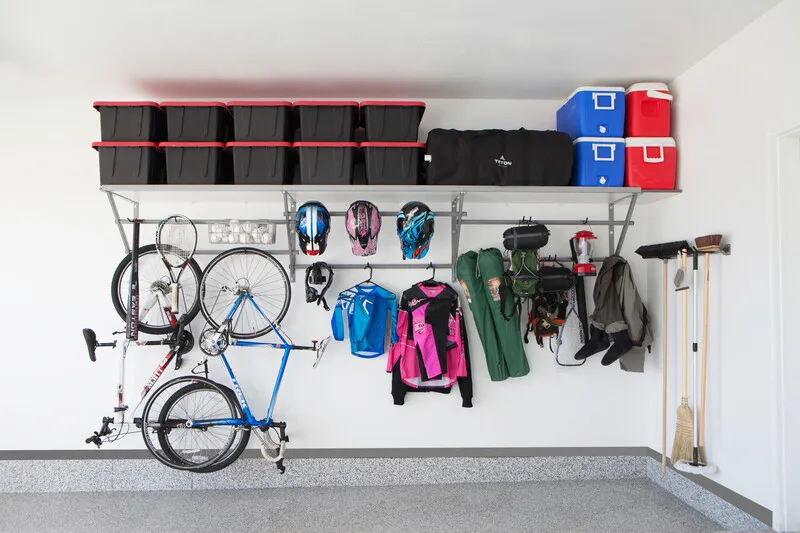
Most people in Omaha treat the garage like a giant junk drawer. Bikes, holiday boxes, camping gear, and lawn tools all get piled up until the floor disappears. That is exactly why so many homeowners turn to monkey bars garage storage to get things off the ground and onto the walls and ceiling. It clears space fast and makes the garage feel twice as big.
But here is the part many folks forget. Once heavy bins are hanging over a car or a kid’s bike, monkey bars garage storage safety becomes a real concern. Overhead storage that fails does not just spill boxes. It can dent a vehicle, damage the wall, crack the garage flooring, or hurt someone standing below.
This guide breaks down the 9 biggest factors that affect monkey bars garage storage safety. Each section explains what to look for, what can go wrong, and simple steps to stay safe. The goal is to help every Omaha homeowner store more without the worry.
Why Monkey Bars Garage Storage Safety Matters in Omaha

Omaha garages take a beating. Summers get hot and humid. Winters bring freezing temps, snow, and road salt tracked in on tires. All of that moisture and temperature change works against metal parts over time. That is why monkey bars garage storage safety deserves extra attention in this part of Nebraska.
Good garage storage systems are built to hold serious weight. Many monkey bars shelving units can support hundreds of pounds when installed right. The problem is not usually the product. The problem is how it gets used, mounted, and maintained. When something goes wrong with overhead garage storage, it tends to go wrong all at once, and gravity does the rest.
The good news is that most failures are easy to prevent. Knowing the warning signs is half the battle. Below are the factors that matter most for garage storage safety.
Curious just how much your racks can handle? Take a closer look in “How Safe Is Monkey Bars Garage Storage for Heavy Items?“
9 Factors That Affect Monkey Bars Garage Storage Safety

1. Weight Limits and Overloading
Every storage rack has a weight limit, and overloading is the number one cause of failure. It is tempting to keep stacking bins on monkey bars shelving because it looks like there is room. But space and strength are two different things.
What to check: Find the weight rating for your monkey bars storage unit. Then add up what you are actually storing. Wet gear, tools, and paint cans are heavier than they look.
How to avoid the problem: Stay well under the listed limit. Leaving a safety buffer keeps monkey bars garage storage safe even when you add one more box during the holidays. Store the heaviest items low and closest to the wall supports.
Warning sign: Any bowing or sagging in the shelf means the load is too heavy. Do not wait. Remove weight right away.
2. How the System Is Installed
Installation is where most monkey bars garage storage safety problems begin. A rack is only as strong as the point where it connects to your home. If the brackets are screwed into drywall instead of solid framing, the whole thing can pull loose.
What to check: Confirm that every mounting point is anchored into wall studs or ceiling joists, not just into drywall or thin sheathing.
How to avoid the problem: Follow the maker’s instructions exactly, and use the hardware that comes with the product. For heavy overhead garage storage, many Omaha homeowners choose professional installation for peace of mind.
Warning sign: Gaps behind the bracket, cracked drywall around screws, or a rack that shifts when you tug on it all point to a weak install.
3. Wall Material and Stud Placement
Not all garage walls are the same. Some are finished with drywall, some have bare studs, and some older Omaha homes have odd framing. Wall type has a big effect on how well monkey bars garage shelving holds up.
What to check: Use a stud finder to locate the framing. Brackets should always land on studs, which are usually 16 inches apart.
How to avoid the problem: Never rely on drywall anchors alone for heavy garage storage systems. They are not made to hold the kind of load garage gear puts on them.
Warning sign: If a bracket feels soft or spongy when tightened, it likely missed the stud. Reposition it before loading anything.
4. Ceiling Joist Strength and Spacing
Overhead garage storage puts stress straight up on the ceiling. That load rides entirely on the ceiling joists. If those joists are weak, damaged, or spaced too far apart, the ceiling rack can pull down over time.
What to check: Look for the direction and spacing of your ceiling joists. Overhead racks need to be secured across multiple joists, not hung from just one.
How to avoid the problem: Match the rack to the joist layout, and never mount an overhead unit into the ceiling drywall alone. This is a key part of monkey bars garage storage safety that gets overlooked.
Warning sign: Cracks in the ceiling near the mounts, or a rack that dips in the middle, means the joists may be struggling.
5. Rust and Corrosion From Omaha Weather
This factor hits Omaha harder than warmer, drier regions. Humid summers and salty winter slush create the perfect setup for rust. Rust weakens metal brackets, bolts, and rails, which quietly chips away at garage storage safety.
What to check: Look for orange spots, flaking, or rough patches on the metal parts of your monkey bars storage. Pay close attention to bolts and welds.
How to avoid the problem: Keep the garage as dry as you can. A dehumidifier helps in summer. Wiping down road salt in winter protects both your car and your monkey bars garage shelving.
Warning sign: Any rust on a load-bearing bolt is a red flag. Corroded hardware should be replaced, not ignored.
6. Uneven Weight Spread
Even when total weight is safe, how you spread it out matters. Piling everything on one side of a shelf creates a tipping point. Uneven loads put stress on one bracket instead of sharing it across the whole unit.
What to check: Look at how items sit across the shelf. One heavy corner and one empty corner is a problem.
How to avoid the problem: Balance the load side to side and front to back. Center the heaviest items over the strongest supports. This simple habit protects monkey bars garage storage safety without any tools.
Warning sign: A shelf that leans or a rack that feels tippy usually means the weight is off balance.
7. Loose or Worn Hardware
Bolts and screws do not stay tight forever. Vibration from garage doors, slamming car doors, and daily use slowly loosens hardware. Over months and years, this quietly lowers the strength of your garage storage systems.
What to check: Grab a wrench and test the main bolts a couple times a year. They should be snug, not spinning free.
How to avoid the problem: Retighten any loose hardware, and swap out any bolt that looks stripped or bent. Keeping fasteners tight is one of the easiest ways to protect overhead garage storage.
Warning sign: A rattle, a wobble, or a bolt you can turn with your fingers all mean it is time for a tune-up.
8. Temperature Swings in the Garage
Omaha garages go from freezing in January to hot and sticky in July. That constant swing makes metal expand and contract. Over time, this movement can loosen joints and stress the parts of your monkey bars shelving.
What to check: After a big weather change, glance at your racks. Look for new gaps, shifting, or loosened bolts.
How to avoid the problem: Do a quick seasonal check when the temperature flips. This is a smart, low-effort way to keep monkey bars garage storage safe all year.
Warning sign: Hardware that was tight in spring but loose by fall is reacting to temperature change and needs another tighten.
9. Skipping Regular Inspections
The final factor is simply not paying attention. Most homeowners set up their garage storage systems once and never look again. Small issues stay hidden until a shelf comes down. Regular checks catch trouble early.
What to check: Do a full walk-around at least twice a year. Look at brackets, bolts, shelves, and the wall or ceiling behind them.
How to avoid the problem: Put two reminders on the calendar, one in spring and one in fall. A 10-minute check protects your gear, your car, and your family. Consistent inspections are the backbone of monkey bars garage storage safety.
Warning sign: If you cannot remember the last time you checked your racks, that is the sign to do it today.
Ever wonder what happens before these systems reach your garage? See the full process in “How Is Monkey Bars Garage Storage Safety Tested?“
Quick Safety Checklist for Your Garage
Use this simple list to review your setup:
- Confirm every rack is under its weight limit.
- Check that all brackets hit studs or joists.
- Spread weight evenly across each shelf.
- Look for rust on metal parts and bolts.
- Retighten loose hardware twice a year.
- Store heavy items low and close to the wall.
- Do a full inspection each spring and fall.
Running through this list takes only a few minutes. It is one of the most reliable ways to keep monkey bars garage storage safe over the long haul.
Want to see how these systems perform under real pressure? Find out in “Does Monkey Bars Garage Storage Safety Hold Up?“
When to Call a Pro in Omaha
Some jobs are worth handing to an expert. Heavy overhead garage storage, tricky ceiling layouts, and older homes with unusual framing all raise the risk of a bad install. A professional knows how to read the framing and mount racks the right way the first time.
Professional installation in the Omaha area usually runs at an average cost that many homeowners find well worth the safety and time saved. When racks are holding hundreds of pounds over a vehicle, expert setup pays off. Trained installers also spot weak spots that are easy to miss and can recommend the right monkey bars garage shelving for your space.
If a rack is already sagging, rusting, or pulling loose, remove the weight first, then get it checked. Do not keep using overhead garage storage that shows warning signs.
Store More Without the Worry

A well-built garage storage system turns a messy garage into usable space, and that is a huge win for any Omaha home. The key is respecting the factors that affect monkey bars garage storage safety, from weight limits and installation to Omaha’s rough weather and simple upkeep. Pairing safe storage with a garage coordinated design and sturdy garage cabinets takes both function and style to the next level.
None of these steps are hard. Check the weight, mount into solid framing, watch for rust, balance the load, and inspect twice a year. Do that, and your monkey bars storage will keep your gear off the floor and safely overhead for many years. Smart storage and smart safety go hand in hand.
Ready for a Safer, Smarter Garage?
Platinum Garage Solutions helps Omaha homeowners get the most out of their space with expertly installed monkey bars garage storage built to last. Our team knows local homes, local weather, and exactly how to mount your storage systems so they stay safe and solid for years. From the first measurement to the final bolt, quality and safety come first, so you can trust every shelf overhead. Ready to clear the clutter and store with confidence? Contact us today or give us a call to get started.