



Monkey bars garage storage is safe for heavy items when it is anchored into wall studs or ceiling joists, loaded within its rated weight limit, and inspected once or twice a year. Most problems in Omaha garages come from bad installation, ignored weather damage, or overloading one spot, not from the product itself. When the basics are right, monkey bars garage storage safety holds up very well for tools, totes, tires, and seasonal gear, whether it is stored on wall shelving or overhead storage racks that keep the floor clear. Pairing that setup with durable garage flooring rounds out a space that stays organized and easy to work in.
What Monkey Bars Garage Storage Actually Is

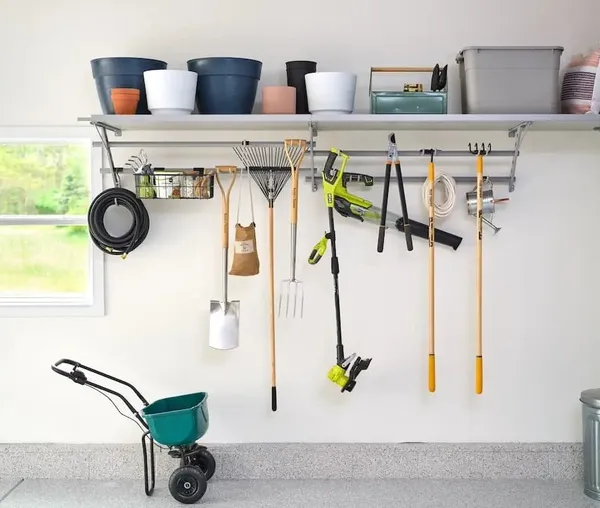
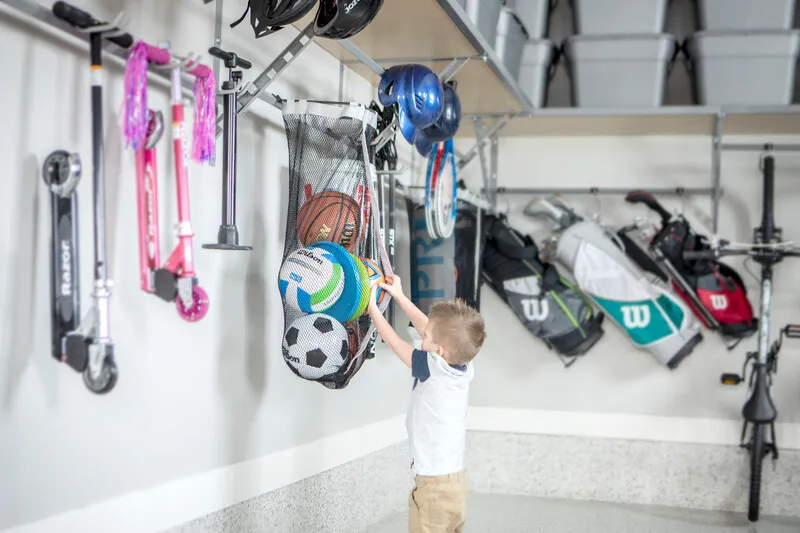
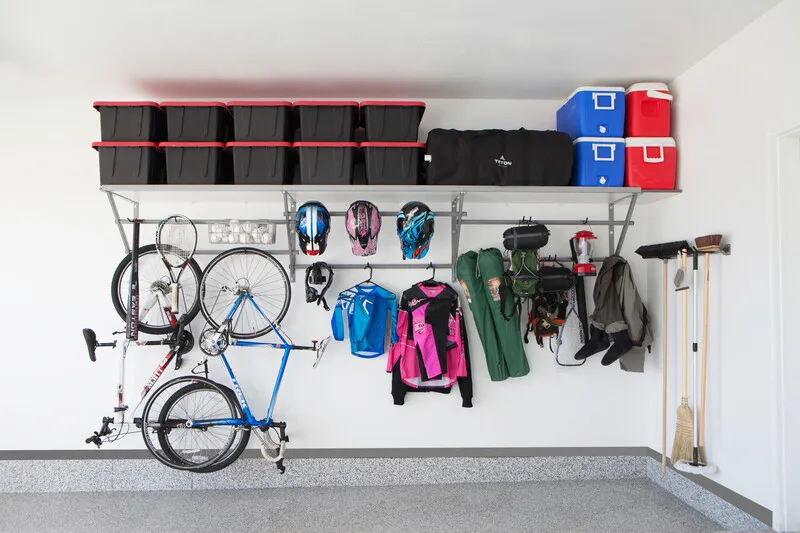
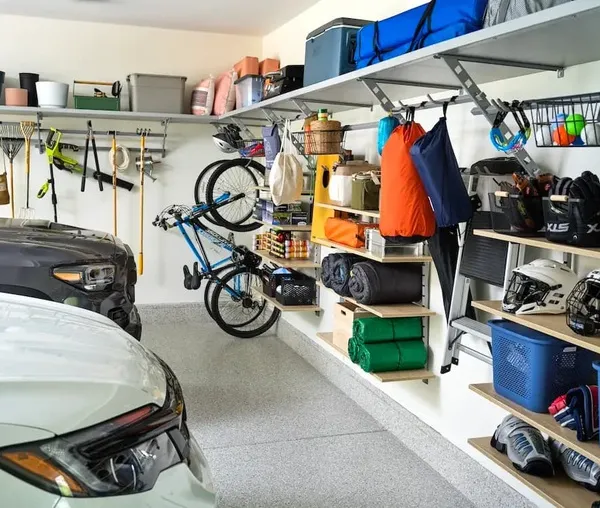
Monkey bars garage storage is a modular system of rails, hooks, shelves, and overhead racks that mount to the walls and ceiling of a garage. The idea is simple. Instead of stacking boxes on the floor, everything hangs up and out of the way. That frees space for the car and keeps clutter off a cold concrete slab.
The system usually includes three parts. The first is monkey bars shelving that bolts to the wall for totes and bins. The second is hook and rail hardware for bikes, ladders, and yard tools. The third is overhead garage storage racks that hang from the ceiling for items used only a few times a year. Together these pieces make up a full garage storage system that many Omaha homes rely on to survive long winters and packed two-car garages.
The big question is not whether the product looks strong. It usually does. The real question is whether monkey bars garage storage safety holds when a family loads it with 300 pounds of heavy stuff and forgets about it for a year. That is what the rest of this list covers.
For a closer look at the factors that make or break a setup, read the guide “What Affects Monkey Bars Garage Storage Safety?“
The System Is Built Around Studs and Joists, Not Drywall
The single biggest factor in monkey bars garage storage safety is what the hardware is screwed into. This system is designed to grab wall studs and ceiling joists. Those are the thick wood or steel framing members hidden behind the drywall. They are the strong bones of the garage.
Drywall alone cannot hold heavy items. Drywall anchors might handle a broom or a light rake, but they were never meant for a loaded shelf. When monkey bars shelving is bolted straight into solid studs, the weight transfers into the frame of the house. That is where the strength lives.
Many older Omaha homes, especially in areas like Dundee, Benson, and Millard, have garages built decades ago. Stud spacing and framing quality can vary. Before trusting any garage storage system with heavy loads, the installer needs to find the real studs with a quality stud finder and confirm the lag bolts bite into wood, not just board.
Tip: Give any wall-mounted shelf a firm two-hand tug before loading it. If it flexes away from the wall or the screws feel soft, the anchoring is wrong. That is a job for a professional, not a heavier bag of screws.
Curious how these limits get verified in the first place? The article “How Is Monkey Bars Garage Storage Safety Tested?“ breaks down the process.
Weight Ratings Are Real, but Only If Installed Right
Every monkey bars storage component comes with a weight rating. Shelves, hooks, and overhead racks each have a number the maker tested them to hold. Those numbers are trustworthy, but they carry a hidden condition. The rating only applies when the piece is installed exactly the way the instructions say.
A rack rated for hundreds of pounds does not keep that rating if two of its four bolts missed the joists. Skipping a bolt, using the wrong length screw, or spacing brackets too far apart quietly lowers the true limit. This is where monkey bars garage shelving fails most often. The part is fine. The install cut the strength in half.
Overhead garage storage is especially sensitive here because gravity pulls straight down on every fastener all day, every day.
What to check: Count the mounting points listed in the manual and make sure every single one is used and hits framing. If the manual calls for six lag bolts, six is the number. Five is not close enough for heavy items.
Want to know whether these systems really last under real-world loads? The piece “Does Monkey Bars Garage Storage Safety Hold Up?” answers that question in detail.
Omaha Weather Puts Extra Stress on Garage Storage
Omaha garages are not climate controlled. They swing from humid summer afternoons to deep winter freezes, sometimes within the same week in spring. That temperature and moisture cycle matters for garage storage safety more than most people expect.
Moisture is the quiet enemy. Humid summer air can rust hardware over time. Winter road salt tracked in on tires and boots speeds that up. Rusted bolts lose grip strength slowly, so a shelf that felt solid three years ago may be weaker now without looking any different.
Freeze-thaw cycles also work on the framing itself. Wood expands and contracts with moisture. Over many seasons this can loosen fasteners a little, which is why garage storage systems in colder climates need a check-up more often than ones in mild, dry regions.
Solution direction: Once a year, ideally in fall before the heavy season, look for orange rust streaks around bolts and any gap opening between the bracket and the wall. Surface rust and loose hardware are early signals. Catching them early keeps monkey bars garage storage safety intact instead of letting a small issue grow.
Overhead Racks Carry Different Risks Than Wall Shelving
Not all parts of the system carry the same risk. Wall-mounted monkey bars shelving that fails usually slides down the wall, which is bad but often slow. Overhead garage storage that fails drops straight onto whatever, or whoever, is below it. That includes the car and anyone walking under it.
This does not mean overhead racks are unsafe. It means they deserve the most respect. Overhead garage storage should hold light and medium seasonal items like holiday bins, camping gear, and empty coolers. It should not become the home for the heaviest, densest objects in the garage. Bags of concrete, full tool chests, and stacked paint cans belong low and on the floor or on wall shelving, not hanging over the hood of a vehicle.
Tip: Keep the heaviest items on the ground and light-to-medium items up high. This one habit removes a large share of overhead garage storage danger without any tools at all.
Load Distribution Matters More Than Total Weight

A garage storage system rated for a big total number can still fail if all that weight lands in one small spot. Load distribution is the part most homeowners never think about, yet it decides a lot of real-world outcomes.
Picture a long shelf rated for a few hundred pounds. Spread evenly, it is fine. Pile every heavy toolbox on one end, and that end is now carrying far more than its share while the bolts there strain. The shelf might be within its total rating and still be at risk because the balance is off.
The same rule applies to monkey bars garage shelving holding totes. Bins of books and metal parts are much heavier than bins of blankets, even when they look identical. Stacking three metal-filled totes side by side over one bracket is a common quiet overload.
What to check: Spread heavy items across the full length of a shelf and across multiple brackets. Mix heavy and light bins rather than clustering all the heavy ones together. Even weight is a safe weight.
Small Warning Signs Show Up Before a Failure
Storage systems rarely fail with no warning. They almost always give hints first. Learning to read those hints is a core part of garage storage safety, and it costs nothing.
Watch for a shelf that has started to sag or bow in the middle. Look for brackets that have tilted, even slightly. Notice any fresh gap where a mount used to sit flush against the wall. Listen for creaking or popping sounds when weight shifts. Check the floor and shelf surfaces for small piles of drywall dust, which can mean a fastener is slowly pulling loose.
Any one of these is a signal to unload that section and take a closer look before adding weight back. None of them should be ignored, and none of them mean the whole monkey bars storage setup is doomed. They usually point to one fixable spot.
Solution direction: When a warning sign shows up, remove the load first, then have the anchoring inspected. Do not simply add another screw and reload. The cause needs a proper look, and for anything overhead, that look is best done by a professional.
Professional Installation Changes the Safety Math
Monkey bars garage storage can be installed by a confident homeowner, and many do it well. That said, professional installation changes the safety math in a real way, especially for overhead racks and heavy-load walls.
Professionals bring three things that matter. They find true framing quickly and accurately. They use the correct fasteners for the framing type and the local building style common in Omaha garages. They understand load limits and will say no to a plan that overloads a spot. That judgment is often the difference between a system that lasts twenty years and one that quietly weakens.
For a light setup holding rakes and empty bins, a careful do-it-yourself install is reasonable. For heavy items, and for anything hanging overhead, professional installation is the safer path and usually well worth it.
Tip: Ask any Omaha installer whether they anchor into studs and joists on every mount and how they confirm framing. A clear, confident answer is a good sign. Vague answers are not.
What to Check Before Trusting It With Heavy Items
Use this quick checklist before loading any garage storage system with heavy loads:
- Every bracket and rack is bolted into a real stud or joist, confirmed by tug and by stud finder.
- All mounting points listed in the manual are used, with no skipped bolts.
- Fasteners are the correct length and type for the framing.
- Hardware shows no rust, and no bolt turns freely by hand.
- Heavy items sit low, light-to-medium items sit high.
- Weight is spread across the full shelf, not piled in one spot.
- No shelf is sagging, no bracket is tilted, and no gap has opened at the wall.
- Overhead garage storage holds only light-to-medium seasonal gear.
Running through this list twice a year keeps monkey bars garage storage safety strong through Omaha’s rough seasons.
Average Cost Expectations for Omaha Homeowners
Pricing depends on garage size and how much of the system a home needs. On average, a basic wall setup with monkey bars shelving and hooks lands in the low-to-mid range for garage upgrades. Adding overhead garage storage racks raises the average because ceiling work takes more labor and hardware. Full garage storage systems that cover multiple walls plus overhead space sit at the higher end of the average range.
Professional installation adds to the average but often pays for itself by protecting both the stored items and the vehicle below. Compared with the cost of replacing tools crushed by a failed overhead rack, the install is usually the smaller number.
The Safe Setup Formula for Omaha Garages
So, how safe is monkey bars garage storage for heavy items? Very safe, when the fundamentals are respected. The product is strong. Failures almost always trace back to poor anchoring, overloaded spots, ignored weather damage, or heavy items hung overhead where they never belonged. None of those are faults of the system. They are choices that can be corrected.
For Omaha homeowners, the winning formula is simple. Anchor into framing, respect the weight ratings, spread the load, keep the heavy stuff low, and inspect twice a year. A thoughtful garage coordinated design that blends shelving with garage cabinets makes those habits even easier to keep, since everything has a proper place. Do that, and monkey bars garage storage safety will carry a family’s gear reliably for many years, through every freeze and thaw the season throws at it.
Get Your Garage Storage Done Right in Omaha

Getting the fundamentals right is easier with a trusted local team on your side. Platinum Garage Solutions helps Omaha homeowners plan, install, and inspect monkey bars garage storage the safe way, anchoring every mount into solid framing and matching each system to the loads it will actually carry. The result is a garage that stays organized, protects your gear, and gives you peace of mind through every season. Ready to store your heavy items with confidence? Contact us today or give us a call to get started.