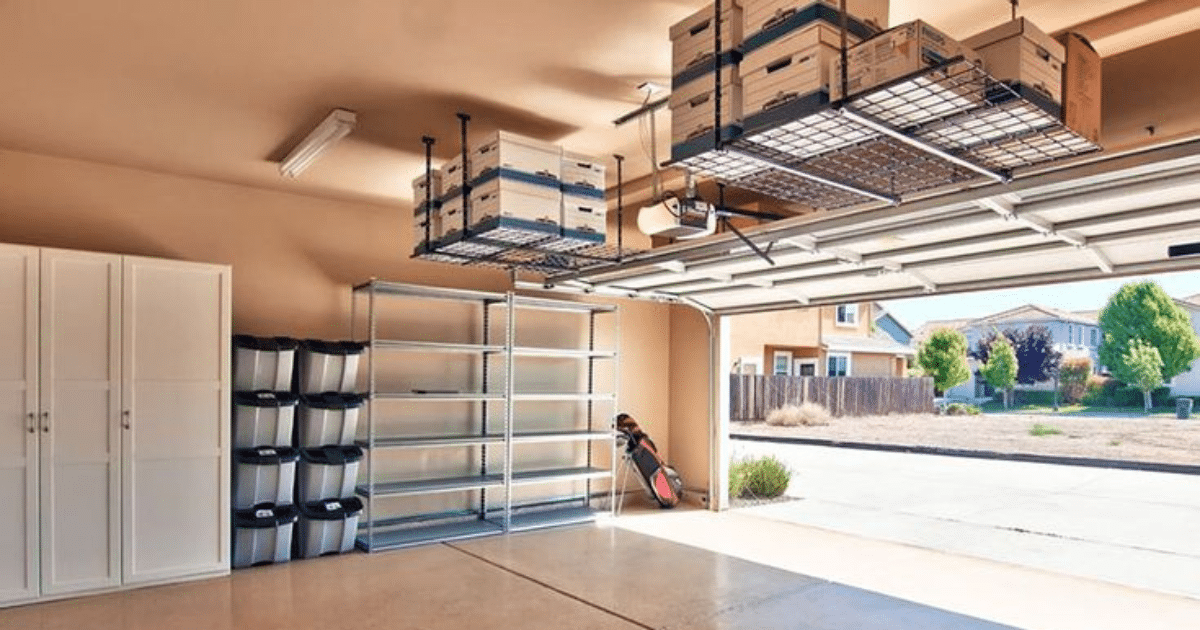





Overhead garage storage can feel like a magic trick. You lift a few bins up to the ceiling, and suddenly the floor looks bigger, the garage feels calmer, and you can move around without bumping into piles. But overhead storage only stays helpful when you store the right things up there. If you store the wrong items, the system becomes annoying fast. You end up dragging a ladder out every weekend, lifting heavy bins at awkward angles, or leaving stuff on the floor because it is easier than putting it back.
In Omaha, NE, overhead garage storage is especially useful because the seasons constantly change what you need. Winter brings shovels, salt, and cold-weather gear. Spring brings yard items. Summer brings camping bins, coolers, and sports equipment. Fall brings leaf tools and holiday storage. Overhead storage can help you keep the garage functional through all of that, but only if you use the ceiling for the right categories.
How to Decide What Belongs Overhead
Before you think about specific items, it helps to use a simple decision system. Overhead storage is best for items that meet these requirements.
Items that belong overhead are usually:
- Used seasonally or only a few times a year
- Bulky enough to steal floor space
- Stored neatly in sealed bins or stable containers
- Not fragile, leak-prone, or sensitive to temperature swings
- Safe to lift up and down from a ladder without strain
Items that usually do NOT belong overhead are:
- Needed weekly or daily
- Heavy enough to feel risky on a ladder
- Loose, oddly shaped, or hard to contain
- Prone to leaking, spilling, or breaking
- Needed quickly during storms or emergencies
A quick way to think about it is this: overhead storage is for space recovery, not for daily convenience. If you need an item all the time, overhead storage will feel like a hassle. If you barely use it, overhead storage can be perfect.
If you want to confirm your garage is a safe fit before you plan overhead loading, read Is Your Garage Safe for Overhead Garage Storage?.
The Best Categories to Store in Overhead Garage Storage
Below are the categories that tend to work best overhead in real-life garages. These are the types of items that fill up garage shelves and floors, but do not need to stay within arm’s reach.
If you’re still deciding when overhead storage makes sense, read When Do You Need Overhead Garage Storage Solutions?
Seasonal Décor and Holiday Storage
Seasonal décor is one of the best uses of overhead garage storage because it is usually stored in bins and only accessed a few times each year.
Great holiday items for overhead storage
- Holiday lights in labeled totes
- Ornaments stored in protective containers
- Wreaths stored in sturdy bins or specialty wreath containers
- Seasonal yard décor that is clean and packed safely
- Wrapping supplies stored neatly in a sealed container
- Holiday table décor and serving items that are not used weekly
Why does this work well overhead
- You typically access it a few times per year
- Most holiday décor fits into bins easily
- It clears shelves and closets inside your home
- You can label it clearly and rotate it seasonally
Organization tip
- Keep holiday décor grouped by holiday, not by “type.”
- Example: one set of bins for Christmas, one for Halloween, one for summer décor
- This prevents digging through multiple bins to decorate
If you are overwhelmed by seasonal clutter and want the “signs you need overhead storage” list, read What Signs Show You Need Overhead Storage Solutions?.
Camping and Outdoor Recreation Gear
Camping gear is bulky, often awkward, and usually not needed every week. That makes it a strong overhead storage category.
Good camping items for overhead storage
- Tents in protective bags inside a bin
- Sleeping bags or pads in sealed containers
- Camp kitchen supplies in labeled totes
- Lanterns and camp lights are stored in a protective bin
- Folding camp chairs (when stored safely)
- Compact outdoor games are stored in a single category bin
Why does this work well overhead
- Camping gear takes up a lot of floor space
- It is used in seasons, not daily
- It is easier to keep as a complete “camping kit”
- You can avoid losing small parts by using sealed bins
A useful rule
- Store your “camping setup” as a system.
- Camp kitchen in one bin
- Sleeping gear in one bin
- Tent and poles stored together
- This prevents “missing pieces” when it is time to go
BobVila highlights overhead storage as a smart way to reclaim floor space for bulky categories like seasonal gear and recreation bins.
Sports Gear by Season
Sports equipment often creates garage clutter because it arrives in waves. When a season ends, the gear doesn’t disappear. It just needs a storage home.
Sports items that store well overhead
- Off-season balls, pads, helmets, and accessories in bins
- Ice skates or roller gear are stored in labeled totes
- Water sports items are stored clean and dry
- Training equipment is used only for part of the year
Why does this work well overhead
- It frees up floor and shelf space during the season change
- It prevents gear from taking over the walkways
- It helps families stop mixing sports equipment together
How to keep it clean
- Store sports gear only when it is dry
- Use sealed bins so dust doesn’t build up
- Keep items grouped by season or sport
Family Handyman notes that ceiling-mounted storage works best for bulky gear that takes up floor space but is only used occasionally.
Coolers and Tailgating Supplies
Coolers are large and usually light, which is a perfect combination for overhead storage. Tailgating items also tend to be bulky and seasonal.
Good cooler and tailgating items for overhead
- Hard-sided coolers (empty, clean, and dry)
- Folding tables and tailgating chairs
- Small grills only if fully cooled and stored safely
- Team flags, banners, and tailgate accessories in labeled bins
- Extra serving trays or large event items are stored securely
Why does this work well overhead
- Coolers take up floor space quickly
- They are not used daily
- Storing them overhead keeps them out of walking zones
Important storage rule
- Don’t store coolers with items inside.
- That makes them heavier and harder to lift
- It also increases odor and moisture risk
Folding Chairs, Folding Tables, and Party Gear
Many homeowners have extra seating and event gear that only comes out for gatherings. These items can dominate shelves and garage corners.
Great overhead items
- Folding chairs stored as a bundle
- Folding tables are stored flat when possible
- Party bins with disposable supplies in sealed containers
- Event décor items that are durable and packed well
Why does this work well overhead
- These items are bulky and rarely used
- They take up valuable floor space when stored low
- They store well as a single category
Practical tip
- Keep a “party kit” bin overhead with:
- Table covers
- Extra plasticware
- Serving utensils
- If it is all in one bin, you stop hunting for pieces
Luggage and Travel Items
Luggage is often stored in garages because it is large and not needed daily. Overhead storage can be a good place for it, but only with a simple approach.
Travel items that can go overhead
- Empty suitcases
- Travel bins for occasional trips
- Packing cubes and travel accessories are stored together
What to avoid
- Overpacking suitcases and storing them overhead
- Storing items that could be damaged by temperature swings
Best practice
- Store luggage empty, or with only light, durable travel accessories.
Seasonal Clothing and Footwear
This category works well overhead if you store items correctly. Omaha winters and summers bring major clothing shifts for many households.
Good overhead clothing items
- Winter boots are stored clean and dry in sealed bins
- Seasonal coats and gear are stored in protective containers
- Pool and water gear stored clean and dry
What makes this category tricky
- Moisture can cause odor
- Dust can collect
- Pests can be attracted to fabrics
Better storage habits
- Use sealed bins
- Store clothing only when fully dry
- Use clear labels so you do not open bins repeatedly
Bulk Household Supplies (Sealed and Stable)
Some homeowners store bulk items like paper towels or paper plates in garages. Overhead storage can help, but you need to protect items from moisture and pests.
Bulk items that can be stored overhead
- Paper products are stored in sealed bins
- Extra event supplies stored in sealed containers
- Extra towels or durable household items stored clean and protected
Avoid
- Open packaging that can attract pests
- Cardboard boxes
- Unsealed items that can absorb moisture
Items That Can Go Overhead, But Only If You Store Them Correctly
Some items are not automatically “safe” overhead, but they can be fine when stored the right way.
Emergency and Storm Supplies
This category matters in Omaha because storms can happen quickly. Storm supplies should be easy to access.
Emergency items that can work overhead
- Backup flashlights in sealed bins
- Batteries and small emergency supplies are stored securely
- Extra blankets stored in sealed containers
The key rule
- Emergency supplies should never be buried behind other bins.
- Keep them in the easiest-to-reach rack zone
- Or store them lower if you want faster access
Small Seasonal Tools
Some seasonal tools can be stored overhead if they are safe to handle and not needed frequently.
Examples
- Lightweight seasonal items stored in bins
- Durable accessories and parts stored neatly
Avoid
- Heavy tools
- Sharp tools are stored loosely
- Anything that could drop or cause injury if mishandled

What You Should NOT Store in Overhead Garage Storage
These categories create most overhead storage problems. Even if you can physically store them overhead, it usually leads to inconvenience or safety risk.
Heavy Tools and Equipment
Tools often feel like “garage items,” but they usually do not belong overhead.
Avoid storing overhead
- Toolboxes loaded with tools
- Power tools are stored in heavy cases
- Heavy shop equipment
- Large hardware containers with metal parts
Why is it a problem
- Tools are heavy and awkward
- You are more likely to access them frequently
- Lifting heavy items from a ladder is risky
A better plan is to store tools on wall systems, cabinets, or sturdy shelves at waist height.
Liquids, Chemicals, and Anything Leak-Prone
Leaks are one of the most expensive overhead storage mistakes. Even a small leak can damage many bins below it.
Avoid overhead storage for
- Paint
- Automotive fluids
- Cleaning chemicals
- Lawn chemicals
- Unsealed liquids of any kind
Why it’s risky
- Leaks spread downward
- Temperature swings can damage containers
- Spills are harder to handle overhead
If you store chemicals in the garage, lower, stable storage is usually safer.
Fragile Items and Keepsakes
A garage is not always a gentle environment. Temperature swings and dust are constant. Overhead storage also increases the drop risk.
Avoid storing overhead
- Photo albums
- Family keepsakes
- Delicate décor
- Fragile collectibles
Even if the items are in bins, a drop risk and environmental risk remain.
Daily-Use Items
This is a big one. When daily-use items go overhead, you end up using a ladder constantly. That leads to bins staying on the floor, which brings clutter back.
Avoid overhead storage for
- Dog food or pet supplies are used weekly
- Kids’ daily sports gear
- Everyday cleaning supplies
- Daily yard tools
Overhead storage is for occasional access, not daily routines.
Weight Rules That Keep Overhead Storage Safe
Even if your rack is strong, weight still matters for safe use. The most common overhead storage failure is not the rack. It is unsafe loading habits.
Safe weight habits
- Store bins that one adult can lift safely
- Avoid “mystery heavy” bins
- Spread the weight evenly across the rack
- Keep heavier bins closer to stable rack zones
Simple test
- If you hesitate before lifting it down, it is too heavy for overhead storage.
Container Rules That Make Overhead Storage Easier
The right bins make overhead storage easier to use and easier to maintain.
Best bin features
- Hard plastic with a stable base
- Tight-fitting lids
- Stackable shape
- Handles that are easy to grip
- Labels are placed on two sides
Bin habits that help
- Use matching bins when possible
- Label with category + season
- Avoid cardboard boxes
- Avoid bags that sag and shift
Labeling tip
- Label both the short side and the long side.
- That way, you can read labels from different angles.
How to Organize Overhead Storage So It Stays Useful
Overhead storage becomes a “junk zone” when categories are mixed or bins are unlabeled. A simple layout plan prevents that.
Use category zones
Example overhead zones
- Holiday décor zone
- Camping zone
- Tailgate zone
- Off-season sports zone
- Travel zone
If bins are mixed, you end up opening multiple containers to find one thing. That slows everything down.
Place bins based on access needs
Access placement rules
- Most-used seasonal bins go in the easiest reach zone
- Least-used bins go farther back
- Emergency items stay in the easiest-to-reach zone or lower storage
Leave a little space
Overhead racks work best when they are not packed so tightly that removing bins becomes annoying. A little breathing room helps you avoid “bin jams” where everything has to be moved to reach one container.
Omaha-Friendly Seasonal Rotation Plan
Seasonal rotation is the secret to making overhead storage feel easy.
Spring
- Move winter gear overhead
- Bring yard and summer gear down
Summer
- Keep outdoor gear accessible
- Store holiday décor deeper overhead
Fall
- Move summer gear overhead
- Bring cold-weather gear and storm items closer
Winter
- Keep shovels, salt, and winter essentials easy to reach
- Store summer and camping items overhead
This approach keeps your garage from turning into a seasonal disaster area.
Common Mistakes That Ruin Overhead Storage
Even good systems fail when a few habits creep in.
Mistakes to avoid
- Storing random items overhead “for now”
- Mixing categories in the same bin
- Overloading bins until they are unsafe to lift
- Using cardboard or weak containers
- Storing weekly-use items overhead
- Blocking ladder placement zones
- Forgetting labels and guessing later
Overhead storage works best when it is simple and consistent.
Use the Ceiling for the Right Reasons
Overhead garage storage works best when it stores the right categories: seasonal décor, camping bins, coolers, off-season sports equipment, and other bulky items you do not need every week. When you store heavy tools, leak-prone containers, or daily-use items overhead, the system becomes inconvenient, and clutter returns.
Platinum Garage Solutions helps Omaha, NE, homeowners plan overhead storage layouts that match real routines, safe loading habits, and easy seasonal rotation so the garage stays organized and functional. Contact us or give us a call.