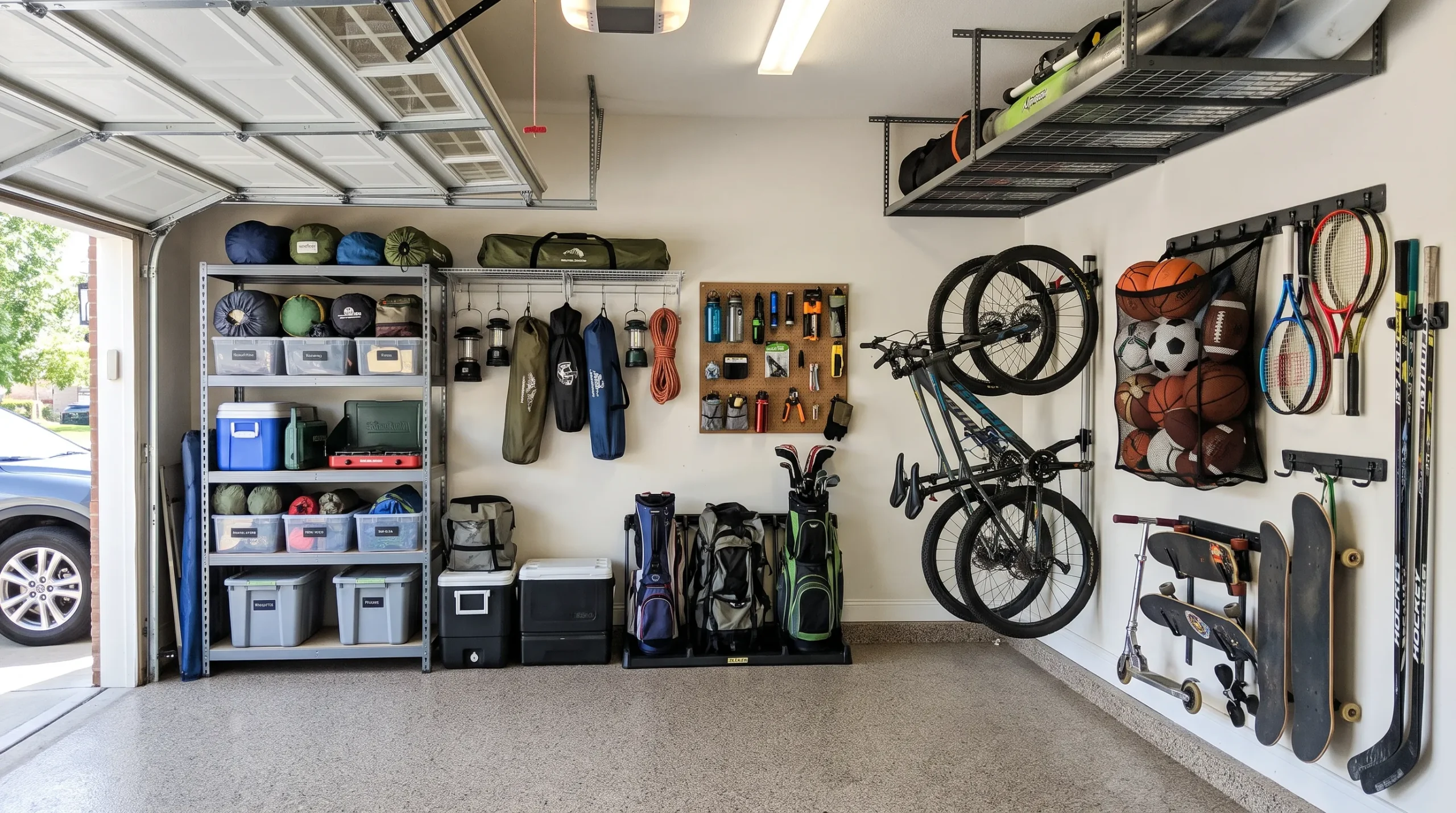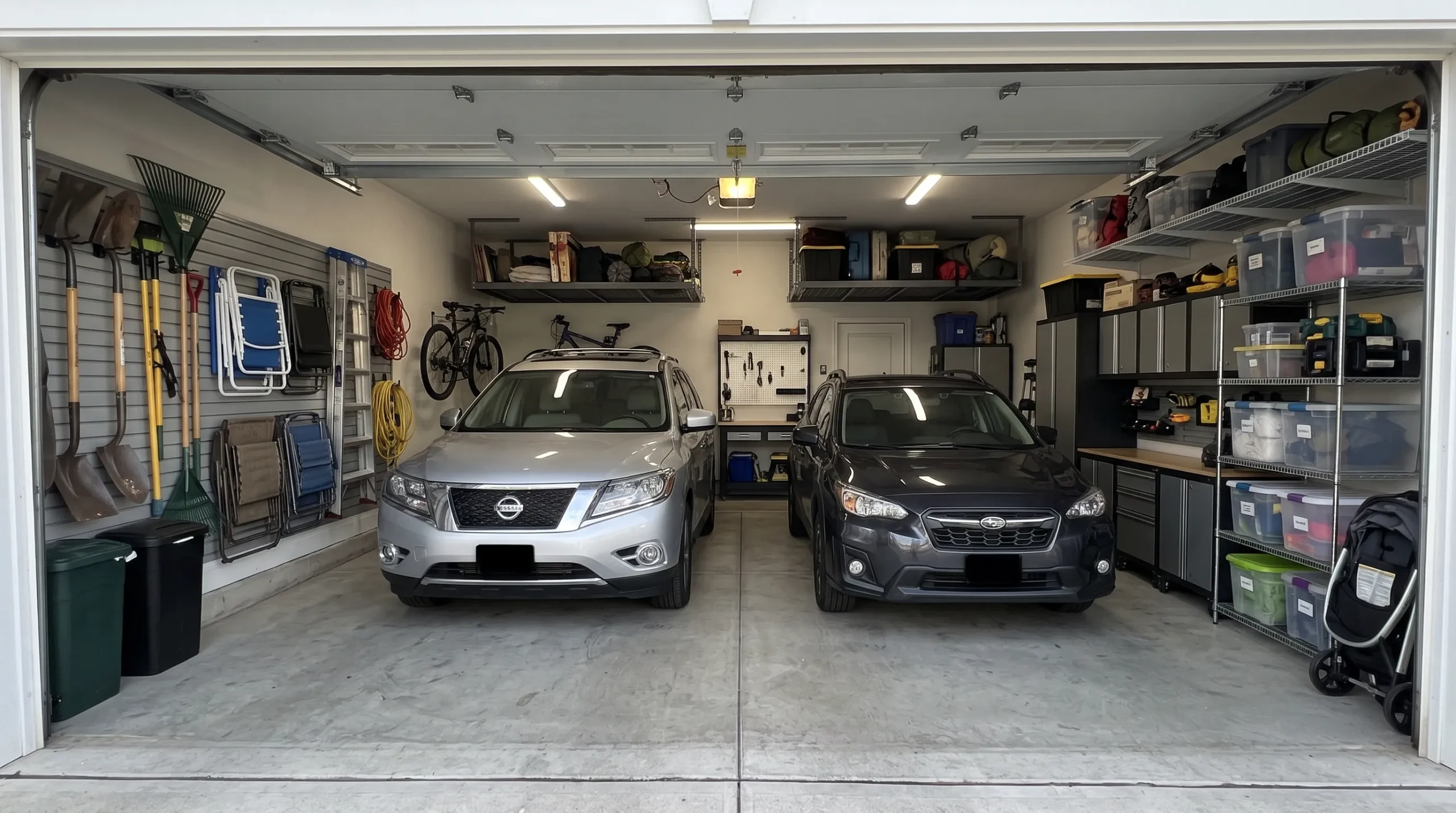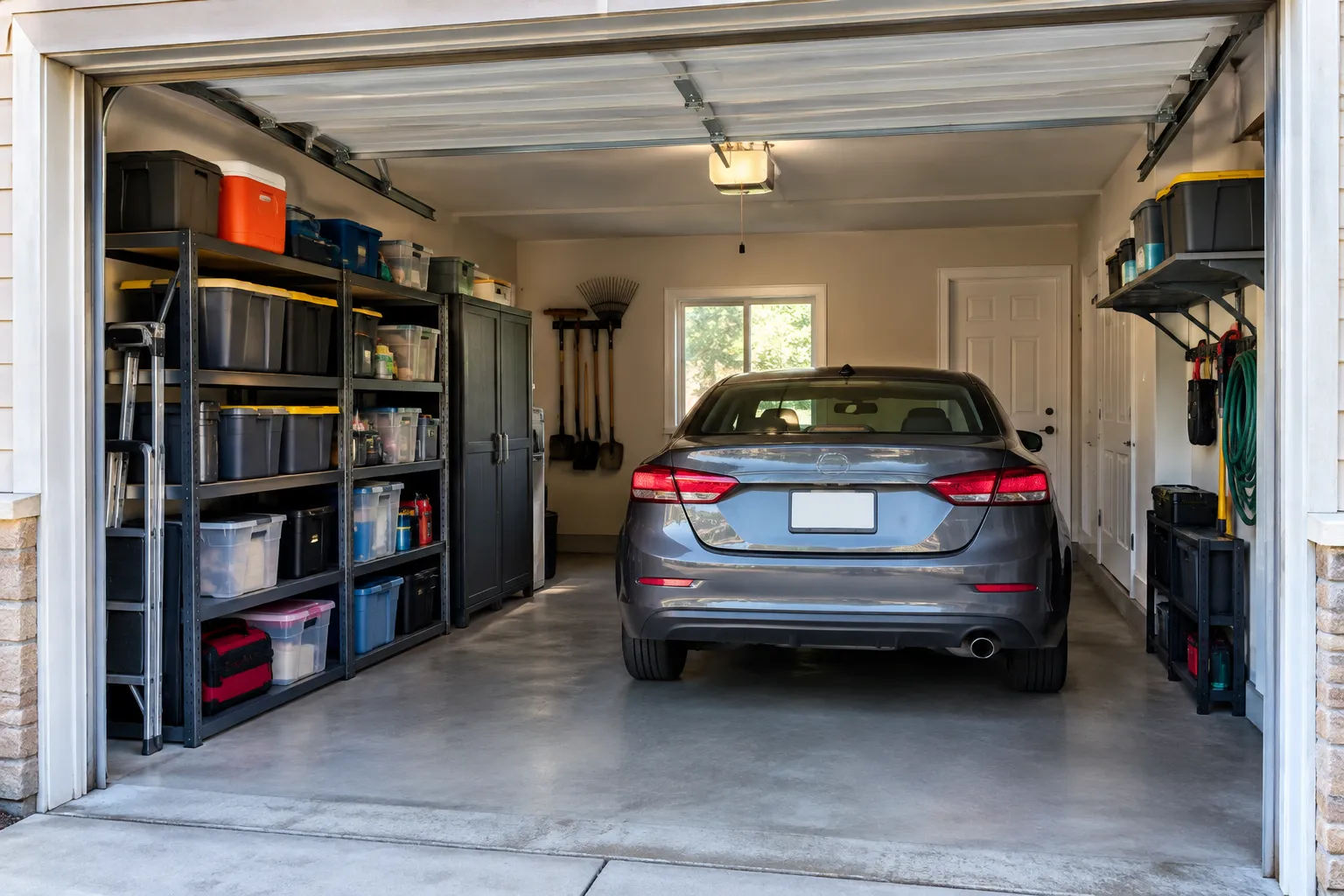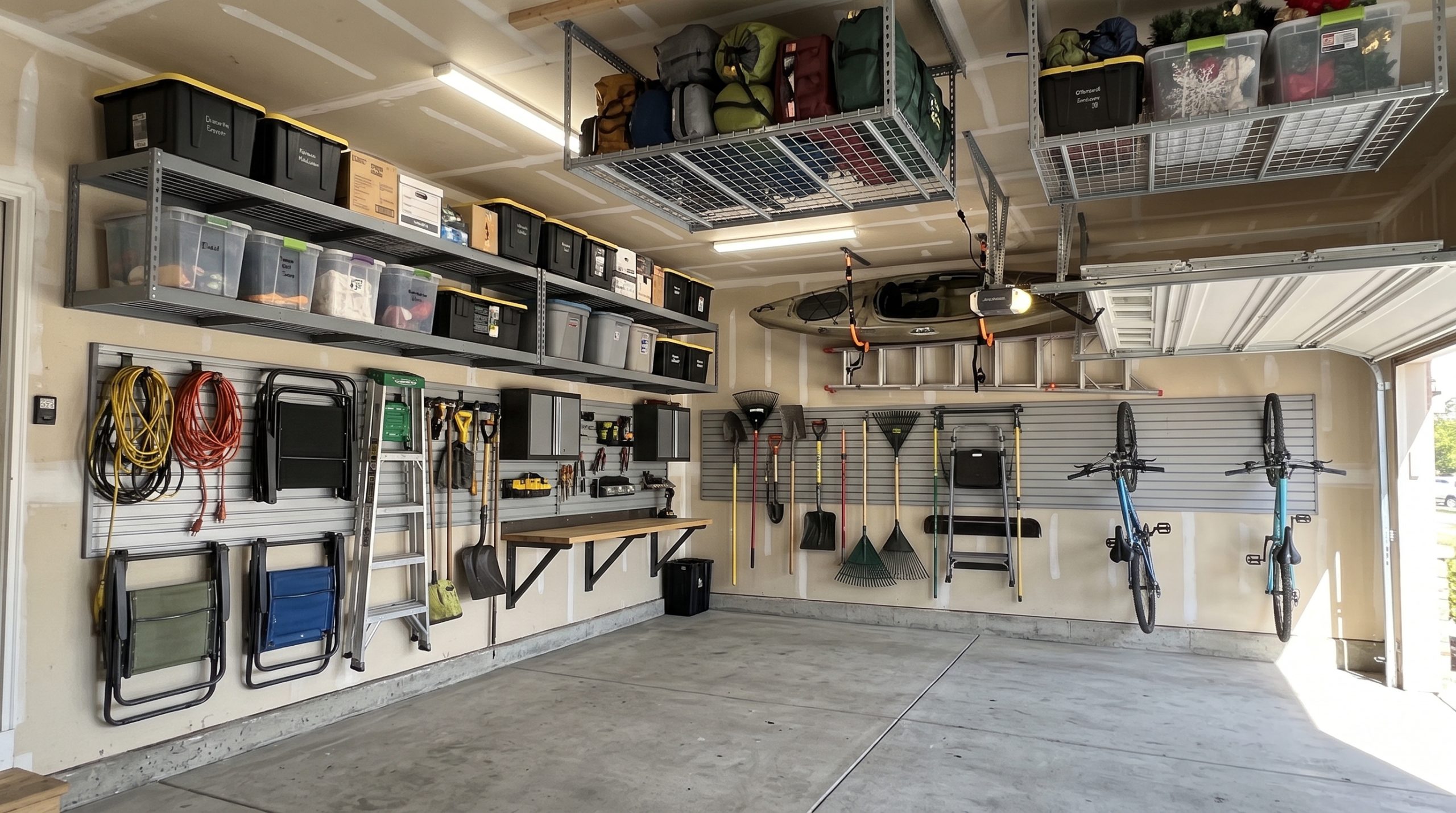





Overhead garage storage can clear the floor fast, but safety has to come first. A ceiling rack is only helpful when it is installed in the right spot, anchored correctly, and planned around your garage door, opener, and vehicle clearance. If any of those parts are off, overhead storage can turn into a daily hassle or a real hazard.
In Omaha, NE, garages deal with big temperature swings, storms, and seasonal gear that keeps rotating in and out. That makes it even more important to confirm your garage is a safe fit before anything goes overhead.
What Makes Overhead Garage Storage Safe?
Safety is not only about whether a rack can hold weight. It also includes how it impacts the garage door system and how you will use the storage day-to-day.
A safe setup means:
- Strong anchoring
- Rack mounts into solid framing, not just ceiling covering
- Hardware is chosen to match the rack design and load plan
- Clear garage door travel
- The door can open fully without rubbing or bumping the rack
- Tracks, torsion hardware, and top panels have room to move
- Opener clearance and access
- Opener rail and motor are not blocked
- Service access remains possible without removing storage
- Vehicle clearance
- You can park without guessing or creeping forward
- Tall vehicles and roof accessories still fit comfortably
- Safe loading and safe access
- Stored items are in sturdy bins
- You can reach items with a stable ladder position
- You are not lifting a dangerous weight overhead
If you need a full decision guide with timing, signs, and what to store, read When Do You Need Overhead Garage Storage Solutions?
Pre-Install Safety Screen for Overhead Storage
Use this as a fast check before planning anything.
Green light signs
- You have an open ceiling space away from the opener rail
- Your garage door opens smoothly with no shaking or scraping
- You have a clear spot to place a step ladder safely
- You store lots of seasonal bins and bulky items that you access only sometimes
Yellow light signs
- Your ceiling is finished, and you cannot easily confirm where the framing is
- Your opener rail runs low and takes up most of the center ceiling
- Your garage feels tight with tall vehicles
- You have a light fixture or attic access in the most obvious rack zone
Red light signs
- Your garage door sticks, binds, shakes, or looks uneven
- Your door does not open fully or reverse for no clear reason
- Your ceiling framing is unknown, and you were planning to guess
- Moisture issues are frequent, and you store items in cardboard or open bins
If you want the “signs you need storage” checklist, read What Signs Show You Need Overhead Storage Solutions?
Ceiling Structure Checks That Matter Most
Overhead storage is only as safe as what it is anchored into. This is the part homeowners often underestimate.
Confirm you have proper framing support
What we look for
- Ceiling framing that can accept secure mounting points
- Safe spacing for mounts that match the rack design
- A rack location that spreads the load in a balanced way
What to avoid
- Mounting into the ceiling covering without confirmed framing support
- Attaching racks in spots that force odd angles or uneven support
- Overloading a small area with heavy bins
Finished ceilings need extra planning
Common finished ceiling situations
- Drywall or panel ceilings that hide framing
- Painted ceilings where studs are not obvious
- Areas where attic access is limited or blocked
Why this matters
- You cannot rely on surface materials for load support
- A safe install requires locating the framing and using the correct mounting points
- The goal is stability over the years, not only week one
Clearance Checks for Door, Tracks, and Hardware
A rack can be perfectly strong and still be unsafe if it interferes with the garage door system.
Garage door travel path
What to confirm
- Door panels have room at the top when the door is open
- Tracks have clearance along the ceiling zone you want to use
- The door does not rub against anything when it moves
Warning signs
- Scraping sounds during opening or closing
- The door shakes near the top
- The door looks crooked, or one side moves before the other
Track type and space use
Why tracks matter
- Some track setups sit higher and closer to the ceiling
- Some setups create wider “no rack zones” near the door
- Any planned rack needs to stay out of the door’s moving space
Torsion hardware and top section clearance
What to account for
- Torsion spring system location above the door
- End bearing plates and cables near the top corners
- The top door section movement as it transitions into horizontal travel
If your door has any performance issues, it is safer to address that before overhead storage planning.
Forbes Home notes that using vertical space strategically can keep floor zones clear, which is why rack placement must protect the garage door’s full travel path.
Opener Clearance Checks
Garage door openers take up ceiling space in ways that can limit where overhead storage should go.
Opener rail clearance
What to watch
- The center rail usually runs from the motor toward the door
- Some rails sit lower than expected
- Some rails extend farther than expected, depending on door height
Safe planning ideas
- Place racks off-center when the rail occupies the middle
- Maintain service access around the motor and rail
- Avoid creating a setup where bins block the rail area
Motor placement and maintenance access
Why access matters
- Openers may need adjustments or service
- You do not want a rack blocking the motor area
- You do not want bins stored where they interfere with safety sensors or wiring routes
Vehicle Clearance Checks
Vehicle clearance is where overhead storage can become frustrating if not planned well.
Height considerations
Items to consider
- Tall trucks and SUVs
- Roof racks, bike racks, cargo boxes
- Antennas or accessories that extend upward
Comfort matters
- You should not have to park perfectly every time
- You should not fear bumping the rack during normal parking
Parking habits and real-life use
Practical checks
- Do you pull in straight every time, or at an angle?
- Do you park one car inside and one outside?
- Do you need space to open doors wide for kids or groceries?
Overhead storage should make daily use easier, not tighter.

Lighting, Attic Access, and Ceiling Obstacles
These obstacles do not always block overhead storage, but they impact placement.
Lighting
Common problems
- A rack blocks light and makes the garage feel darker
- Shadows make it harder to read labels and find tools
Better outcomes
- Plan rack zones that keep lighting usable
- Adjust lighting placement if needed so the space stays bright
Attic access
Important checks
- Can you still open the attic hatch fully?
- Can you place a ladder without hitting the rack?
- Will bins block the path to the access point?
Other ceiling obstacles
Examples
- Vents
- Pipes
- Beams
- Ceiling-mounted storage already in place
- Garage door support braces
A safe plan works around obstacles instead of forcing racks into awkward positions.
This overview of garage ceiling storage highlights why placement planning matters, especially when you need to protect attic access and keep lighting usable.
Load and Weight Safety
Most problems happen when storage is loaded without a plan.
Use consistent bins and clear categories
Best practices
- Use sturdy, matching bins so the load stays stable
- Use lids that seal to reduce dust and pests
- Label bins on two sides so you can read them from different angles
- Group bins by category so you do not “dig” through storage
Balance the load across the rack
Safe loading habits
- Spread heavier bins across the rack instead of stacking weight on one side
- Keep the center of the rack stable with balanced storage
- Avoid putting one giant heavy bin at the edge
Avoid “too heavy to lift” storage
A simple rule
- If a bin feels unsafe to lift down from a ladder, it does not belong overhead
Better alternatives
- Heavy items stay on lower shelves or cabinets
- Bulky but lighter seasonal items go overhead
Omaha Garage Conditions That Affect Safety
Your garage environment impacts what is safe to store and how to protect it.
Temperature swings
What it can do
- Some plastics become brittle in extreme cold
- Some items warp in high heat
What helps
- Use strong bins designed for storage
- Avoid storing delicate items overhead unless protected
Moisture and storms
What to watch
- Water creeping under the door during storms
- Damp corners
- Condensation in humid periods
What helps
- Sealed bins with tight lids
- Avoid cardboard for overhead storage
- Keep moisture-sensitive items in better-protected areas
Dust and pests
What helps
- Sealed bins
- Labels that reduce unnecessary opening
- Clean zones under racks to reduce clutter buildup
Ladder and Access Safety
Overhead storage is only useful if you can safely access it.
Stable ladder placement
Safe access needs
- A clear floor zone where a ladder can sit flat
- Enough room to stand without leaning over a vehicle
- A routine that does not require risky reaching
Store by frequency of use
A practical setup
- Items used weekly stay at waist height or on wall systems
- Items used monthly can go on the garage shelves
- Items used seasonally can go overhead
If you want a clear list of what belongs overhead, read What Can You Store in Overhead Garage Storage?
Red Flags That Mean You Should Pause Before Installing
These are the most common reasons overhead storage should wait.
Garage door performance problems
Red flag signs
- The door looks uneven when moving
- The door shakes near the top
- The door reverses unexpectedly
- The door feels heavy or jerky
Why pause:
- Door adjustments can change clearance and hardware alignment
- A safe rack placement depends on stable door movement
Unknown ceiling framing
Red flag signs
- You cannot identify framing points
- The ceiling is finished, and you planned to try and see
- You do not know what materials are above the ceiling surface
Why pause:
- Overhead racks need correct anchoring for safe load support
Frequent moisture issues
Red flag signs
- Visible water marks
- Damp bins
- Moldy cardboard
- Musty odor that returns often
Why pause:
- You may need to address moisture sources and upgrade storage containers first
How to Know Overhead Storage Will Help Your Garage
A safe and smart overhead system should create clear improvements that you notice fast.
You will likely notice
- Parking feels easier
- Walkways stay open
- You stop moving bins to reach other bins
- Seasonal gear has a permanent home
- Your garage feels calmer and more usable
If you do not notice these improvements
- You may need a combined plan:
- Overhead racks for seasonal bins
- Wall-based garage storage solutions for daily-use items
- A layout that protects the parking and walking zones
Make Overhead Storage Safe Before It’s Spacious
If your garage has solid ceiling support, reliable door movement, and comfortable clearance for your opener and vehicles, overhead garage storage solutions can be a safe way to reclaim floor space and keep seasonal items organized. A smart plan keeps access easy, keeps loads balanced, and protects the garage door system.
Platinum Garage Solutions helps Omaha, NE, homeowners evaluate clearance, confirm safe mounting, and install overhead storage solutions that stay secure and practical. Contact us or give us a call.