



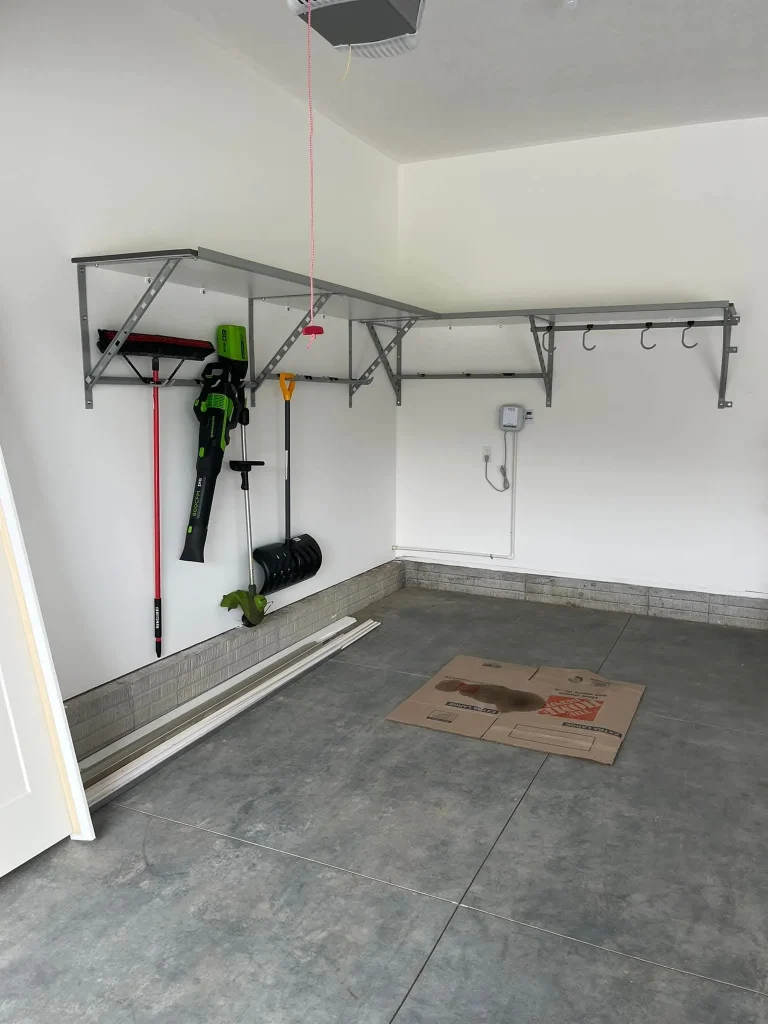
A garage is often one of the most underutilized spaces in a home. While it is commonly used for parking vehicles, it also serves as a storage area, workspace and sometimes even a seasonal transition zone. When the layout is poorly planned, the garage can quickly become cluttered, unsafe and difficult to use. A well-thought-out garage coordinated design helps ensure that every elementfrom storage to movement flowworks together efficiently.
For homeowners in Omaha, garage layout is especially important. Seasonal weather changes from freezing winters to humid summers create additional demands on how the space is organized. Snow-covered vehicles, salt storage, lawn equipment and tools all compete for space throughout the year.
Understanding the most common garage layout mistakesand how to avoid themcan help create a space that is efficient, safe and built for long-term use.

Why Garage Layout Planning Matters More Than You Think
Garage layout is not just about where items are placed. It directly impacts safety, accessibility and even the performance of key systems like the garage door opener and track assembly.
A poorly designed layout can lead to:
- Blocked walkways and limited movement
- Increased wear on garage door components
- Difficulty accessing tools and equipment
- Higher risk of accidents and damage
In Omaha, seasonal factors add another layer of complexity. During winter, vehicles often bring in snow, ice and moisture. Without proper spacing and designated areas, this can lead to slippery floors, rust issues and disorganized storage.
A well-planned garage layout improves:
- Daily convenience
- Long-term durability of systems
- Safety for all household members
- Overall property value
For a deeper look at how layout impacts everyday use, explore the blog “How does garage layout affect daily functionality?”.
10 Common Garage Layout Mistakes
1. Not Planning Around Your Garage Door System
One of the most critical yet overlooked mistakes is failing to design the garage layout around the garage door system. Tracks, springs, cables and the garage door opener all require clear space to operate safely.
When storage items are placed too close to these components, it can interfere with movement, cause unnecessary strain and even lead to system failure over time.
What to check:
- Clearance along ceiling tracks and side rails
- Space around the opener unit
- Any objects hanging near moving parts
How to avoid it:
Always prioritize the garage door system when planning the layout. Keep all moving components fully unobstructed.
Practical solution:
Reposition overhead storage racks or wall-mounted shelves so they do not interfere with the door’s operation. Even small adjustments can prevent costly damage.
To better understand layout issues, check out the blog “What makes a garage layout inefficient or cramped?”.
2. Ignoring Vehicle Space and Clearance
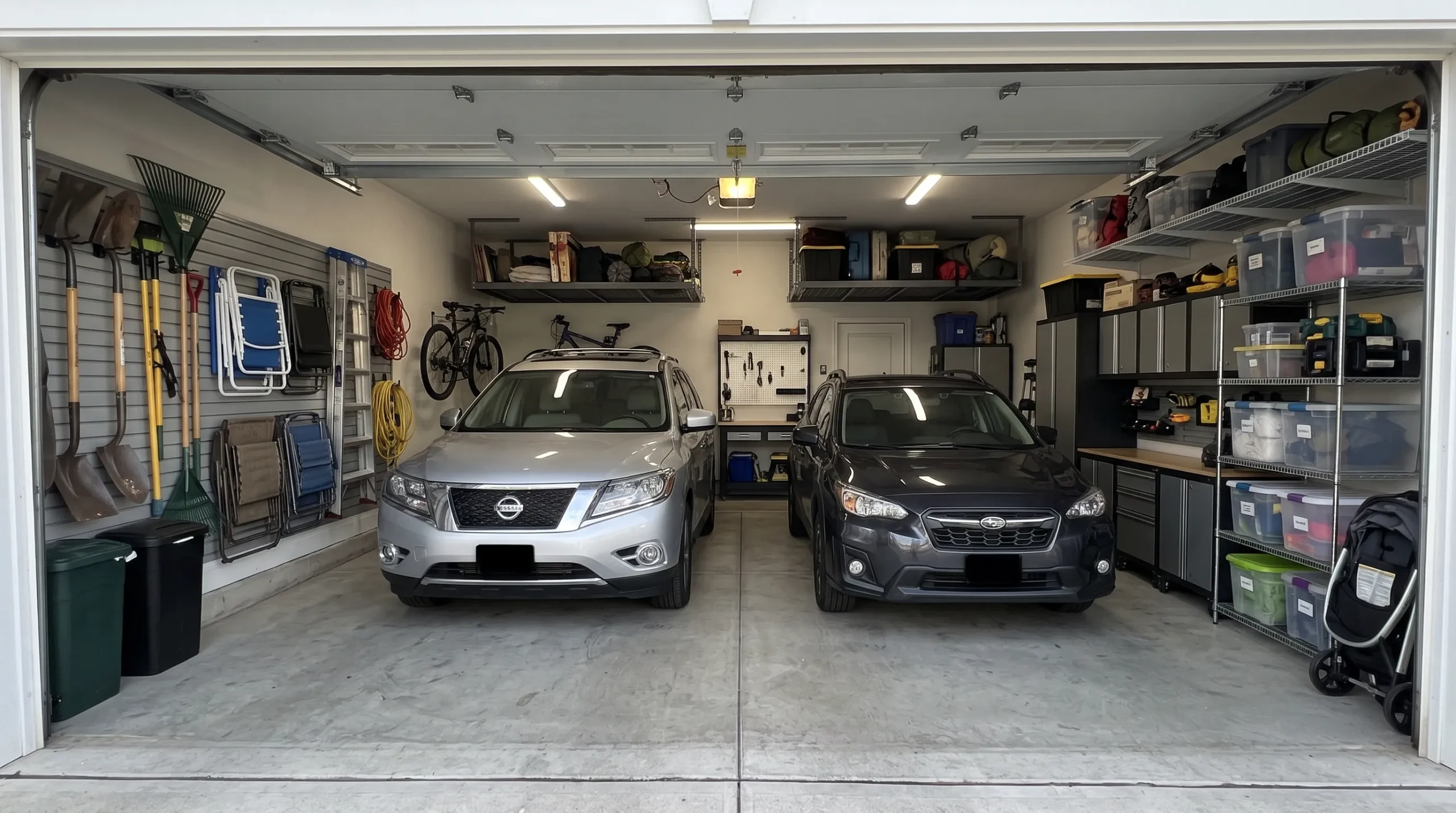
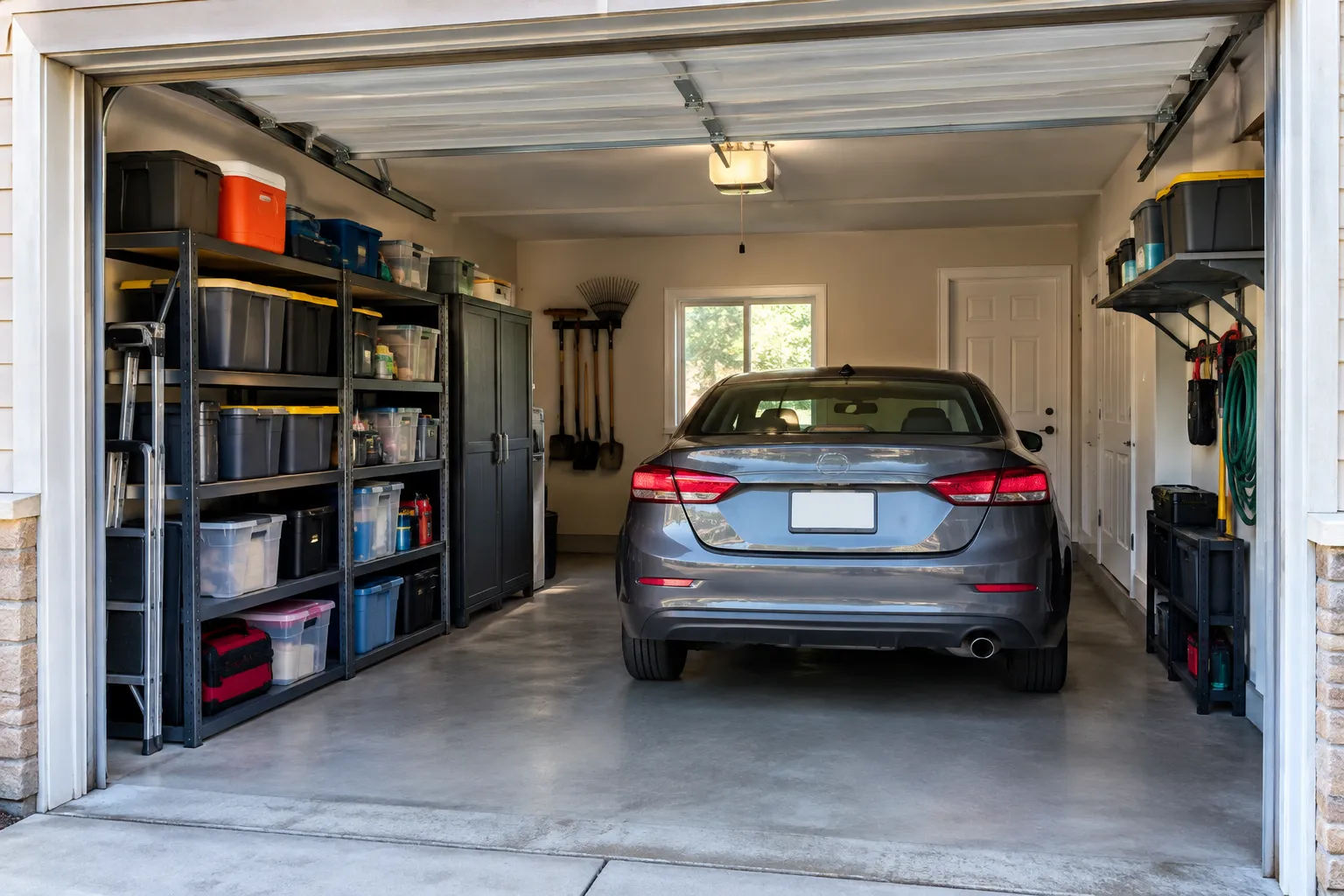
Many garages are designed based on square footage rather than actual usability. Once a vehicle is parked, the remaining space may not be enough to comfortably open doors or move around.
This issue becomes more noticeable in Omaha, where winter gear, boots and snow buildup can take up additional room.
What to check:
- Clearance for fully opening car doors
- Space for walking around the vehicle
- Entry and exit pathways
How to avoid it:
Measure the vehicle and add extra buffer space on all sides. Consider real-life usage, not just empty space.
Practical solution:
Rearrange storage areas to prioritize vehicle clearance. In some cases, downsizing or relocating bulky items can significantly improve usability.
Average cost insight:
Adjusting layout and storage is typically low cost, while structural changes may fall into a moderate range.
To learn more about common planning challenges, read the blog “Why do homeowners struggle with garage layout planning?”.
3. Poor Storage Placement
Storage is essential in any garage, but poor placement can quickly lead to clutter and inefficiency. Items stored randomly or without a system often end up taking over valuable floor space.
What to check:
- Whether storage is mostly floor-based
- Accessibility of frequently used items
- Organization of tools and equipment
How to avoid it:
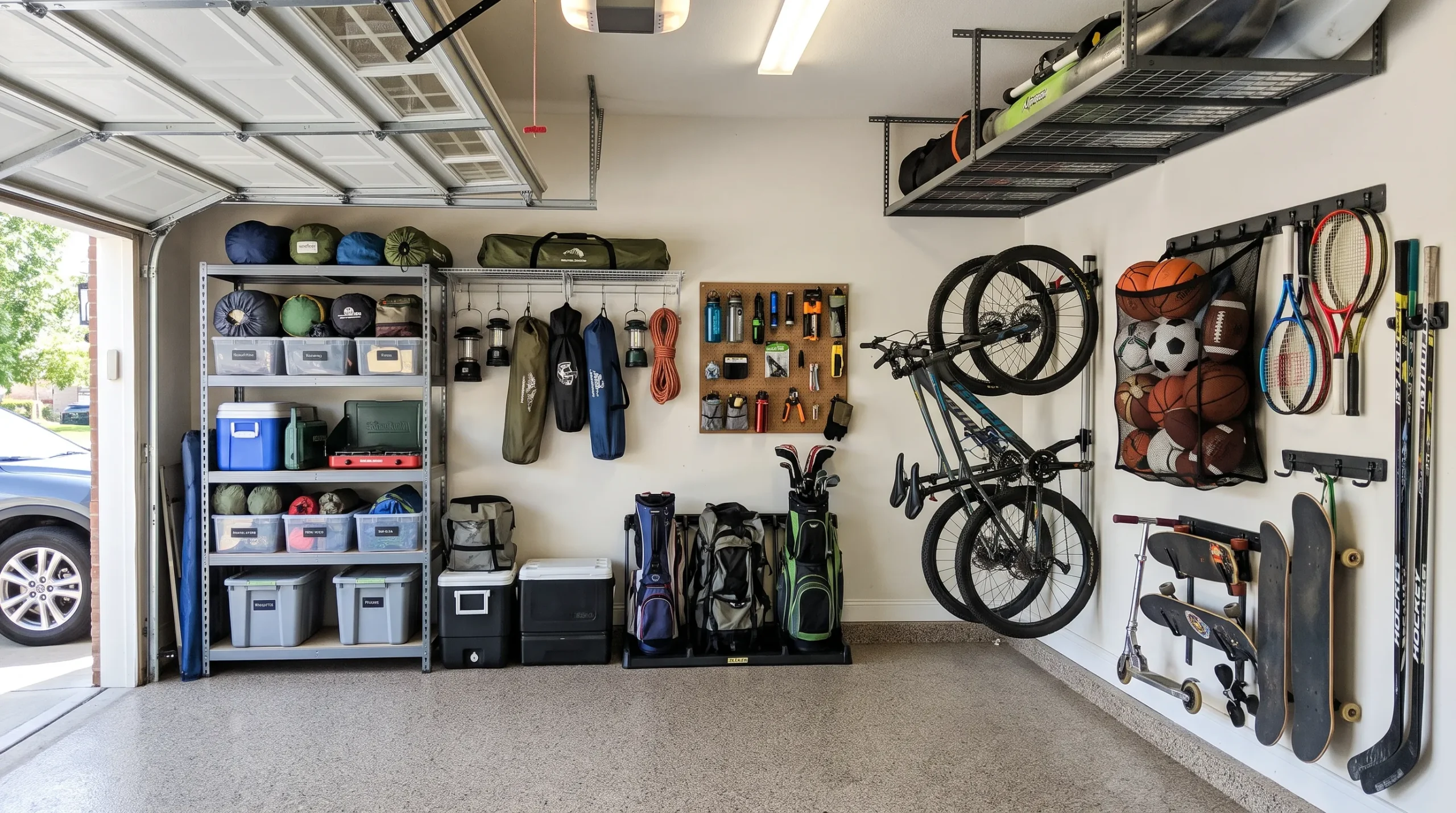
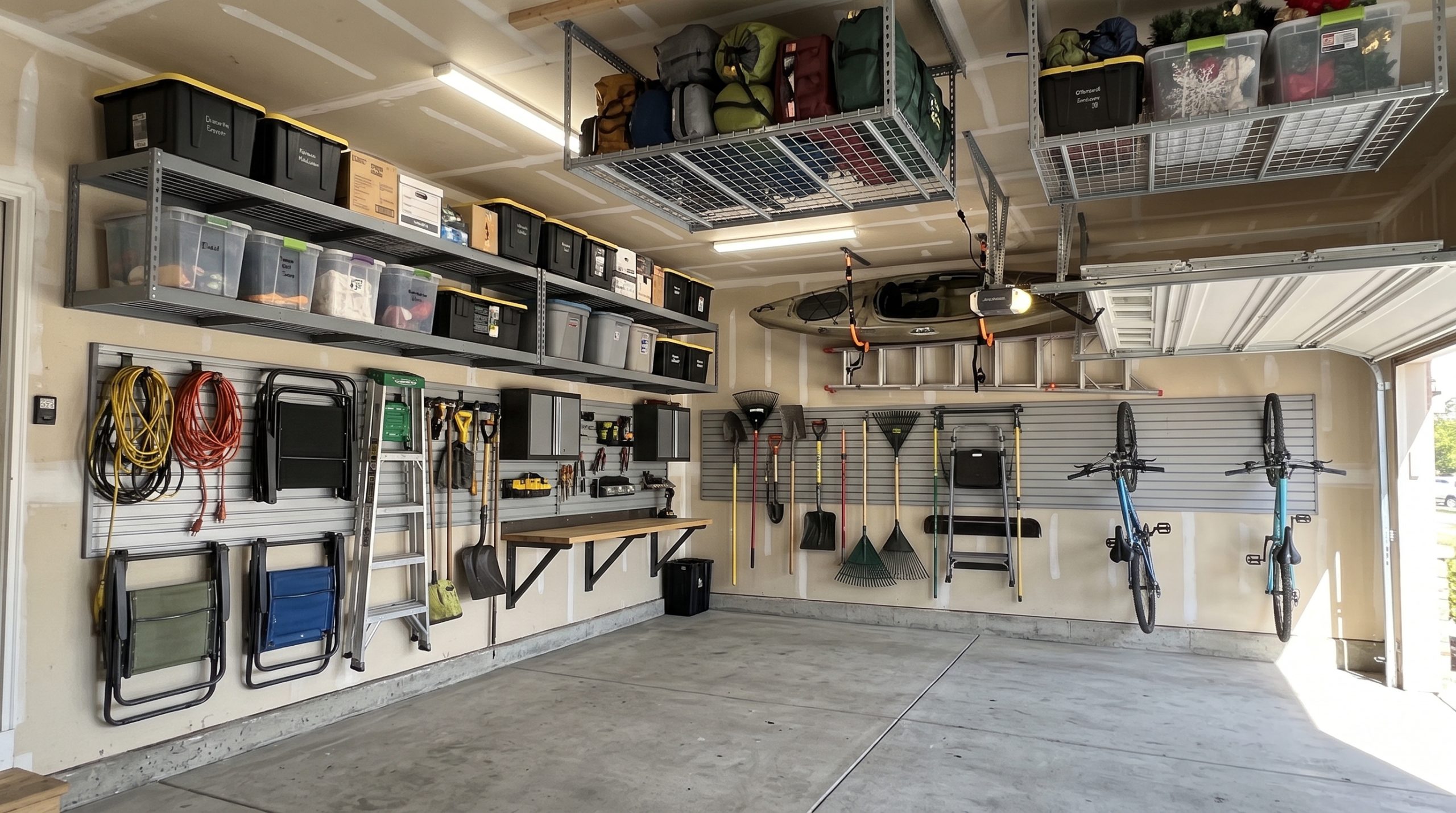
Shift focus to vertical storage solutions such as wall-mounted shelves and overhead racks.
Practical solution:
Group items by category and frequency of use. Keep everyday tools within easy reach while storing seasonal items higher or farther away.
4. Blocking Access to the Garage Door Opener
The garage door opener is a key component that requires occasional inspection and maintenance. When access is blocked, even simple tasks can become difficult.
What to check:
- Clear path to the opener
- Accessibility for maintenance or repairs
How to avoid it:
Designate a clear zone around the opener and avoid placing storage directly beneath it.
Practical solution:
Reorganize nearby storage areas to ensure easy access. This helps prevent delays in addressing minor issues before they become major problems.
5. Not Considering Seasonal Needs in Omaha
Garage layouts that do not account for seasonal changes often become inefficient throughout the year. In Omaha, winter introduces snow tools, salt bags and wet gear, while summer brings lawn equipment and outdoor supplies.
What to check:
- Availability of seasonal storage zones
- Space for drying wet items
- Accessibility of frequently used seasonal tools
How to avoid it:
Create flexible storage areas that can adapt to seasonal needs.
Practical solution:
Use labeled bins, hooks and modular shelving systems that can be rearranged as needed. A dedicated seasonal zone helps keep the garage organized year-round.
6. Poor Lighting Placement
Lighting plays a crucial role in garage safety and usability. Inadequate lighting can make it difficult to navigate the space, especially during early mornings or evenings.
What to check:
- Coverage of overhead lighting
- Visibility in corners and work areas
How to avoid it:
Install a combination of overhead lighting and focused task lighting.
Practical solution:
Upgrade to LED lighting for better brightness and energy efficiency. Proper lighting reduces accidents and improves overall functionality.
7. Ignoring Workflow and Daily Use
A garage should reflect how it is used on a daily basis. Without considering workflow, items may be placed in inconvenient locations, leading to frustration and wasted time.
What to check:
- Placement of frequently used items
- Ease of access when entering and exiting
How to avoid it:
Design the layout based on daily habits and routines.
Practical solution:
Keep commonly used tools near entrances and store less-used items further away. This simple adjustment can greatly improve efficiency.
8. Overloading One Area of the Garage
Concentrating too much weight in a single area can lead to structural stress and safety concerns. Shelving units may become unstable and floors can experience uneven wear.
What to check:
- Distribution of heavy items
- Stability of storage systems
How to avoid it:
Spread weight evenly throughout the garage.
Practical solution:
Use reinforced shelving and avoid stacking heavy items in one location. Balanced storage improves both safety and durability.
9. Not Leaving Space for Future Needs
A garage that is filled to capacity leaves no room for future additions. Over time, this leads to overcrowding and reduced functionality.
What to check:
- Available open space
- Flexibility of storage systems
How to avoid it:
Leave at least 10–20% of the garage space open.
Practical solution:
Choose adjustable shelving and modular systems that can grow with changing needs.
10. DIY Layout Without Professional Insight
While many homeowners prefer a DIY approach, garage layout involves more than just placing shelves and storage bins. Overlooking technical aspects can lead to long-term issues.
What to check:
- Alignment of garage door components
- Overall space efficiency
- Safety risks
How to avoid it:
Seek professional input for more complex layouts.
Practical solution:
A professional assessment can identify issues that may not be immediately visible, helping prevent costly mistakes.
Average cost insight:
Professional guidance is typically a low to moderate investment compared to the cost of repairs.

Signs Your Garage Layout Needs Improvement
Recognizing early warning signs can help prevent bigger problems down the line.
Common indicators include:
- Difficulty moving around the garage
- Limited access to stored items
- Garage door operating unevenly or making noise
- Poor lighting or dark areas
- Frequent clutter buildup
If these issues are present, it may be time to reassess the layout.
Garage Layout Planning Checklist
A structured approach can make garage layout planning more effective.
Before making changes, consider the following:
- Measure total garage space and vehicle dimensions
- Identify essential storage needs
- Check garage door clearance and operation
- Evaluate lighting coverage
- Plan for seasonal storage
- Leave room for future expansion
This checklist helps ensure that all key factors are addressed before reorganizing the space.
Common Myths About Garage Layout and Organization
Several misconceptions can lead to poor layout decisions.
Myth 1: More storage is always better
Too much storage can reduce usable space and create clutter.
Myth 2: Floor storage is the easiest option
Floor-based storage often limits movement and increases safety risks.
Myth 3: Garage layout does not affect home value
A well-organized garage can enhance overall property appeal.
Understanding these myths can help homeowners make more informed decisions.
How Garage Layout Impacts Property Value
A functional and organized garage is a valuable feature for potential buyers. It reflects how well the home has been maintained and adds to overall usability.
Benefits of a well-designed garage include:
- Increased storage efficiency
- Improved visual appeal
- Enhanced safety
- Better long-term durability
In competitive housing markets, a well-planned garage can make a noticeable difference.
Expert Tips to Improve Your Garage Layout
Improving a garage layout does not always require major renovations. Small, strategic changes can deliver significant results.
Helpful tips include:
- Start with decluttering and removing unused items
- Keep walkways and door areas clear
- Use vertical storage to maximize space, including systems like garage slatwall for flexible organization
- Ensure garage door components remain unobstructed
- Invest in durable and weather-resistant storage solutions
- Plan for Omaha’s seasonal conditions
When to Call a Professional
Some issues require more than simple adjustments.
Professional assistance may be needed if:
- The garage door is misaligned or difficult to operate
- The opener is hard to access or malfunctioning
- Structural concerns are present
- Layout changes do not improve functionality
- Existing storage systems like garage shelving are unstable, overloaded, or poorly installed
Professional service ensures that the garage remains safe, efficient and properly maintained.
A Smarter Garage Layout Starts with Better Planning
Avoiding common garage layout mistakes is key to creating a space that works efficiently every day. From proper storage placement to maintaining clear access to garage door systems, each decision plays a role in overall functionality. Incorporating features like garage cabinets can also help keep tools and equipment organized while maximizing available space.
For homeowners in Omaha, factoring in seasonal changes is essential for long-term success. A well-designed garage not only improves daily convenience but also enhances safety and protects valuable equipment.
With the right approach, a garage can become one of the most practical and organized areas of the home rather than a source of frustration.
Get Expert Help for a Smarter, More Functional Garage Layout
For homeowners looking for expert guidance, Platinum Garage Solutions offers reliable support in optimizing garage layouts, improving functionality and ensuring garage door systems operate safely and efficiently. Whether addressing layout challenges or planning upgrades, professional insight can make a lasting difference. Contact us today or give us a call to get started.